


Welcome to KosherVitamins.com
Sign in to see your orders, reorder in a click and use your rewards.
Sign in Create an account- Track every order and buy again in one click
- Subscribe & Save – save on every delivery, skip any time
- Earn store credit for reviews and for sharing with friends
- SHOP BY BRAND
- Adora
- Bluebonnet
- Celestial Seasonings
- Derma E
- Doctors Finest
- Dynamic Health
- Earth Therapeutics
- Enzymedica
- Freeda
- Garden of Life
- Grab1
- Green Field
- Growing Naturals
- Health From The Sun
- Health Garden
- Home Health
- If You Care
- In Balance
- Jason
- Kind
- Kosher Innovations
- Kovite
- L.A. Naturals
- Landau
- Lavenluv
- Leroux
- Manitoba Harvest
- Maxi Health
- MegaFood
- Mount Hagen
- Nature’s Alchemy
- Nature`s Plus
- Natures Answer
- Navitco
- New Chapter
- NuGo Nutrition
- Numi Tea
- Nutiva
- NutraBio
- NutraLife
- NutriBiotic
- Nutri-Supreme Research
- Olivella
- Organic India
- Pukka
- Raw Revolution
- Red Star
- Ricola
- Similasan
- Simply Tera’s
- Solgar
- South of France
- SweetLeaf
- Teeccino
- Tiger Balm
- Trace Minerals Research
- Uncle Moishy
- Yum V’s
- Zahlers
- SHOP BY CATEGORIES
- Accessories
- Anti-aging
- Apparel & Accessories
- Baby & Children’s Supplements
- Baby Bath & Skin Care
- Bath & Personal Care
- Botanicals & Herbs
- Diet & Weight Management
- Formulas
- Gifts, Books & Media
- Healthy Home & Travel
- Herbal Teas & Throat Drops
- Homeopathy
- Medicine Cabinet
- Minerals
- Natural Grocery
- Organic
- ParaStat
- Passover Products
- Pets
- Shop by Health Concern
- Sports Nutrition
- Supplements
- Vitamins & Supplements
- BUY 1 GET 1 FREE
- PRODUCTS A-Z
- SHOP BY SALE ITEMS
- TOP SELLERS
- LEARNING CENTER
.jpg)
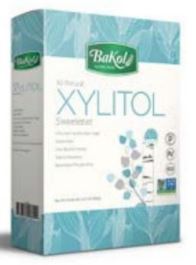
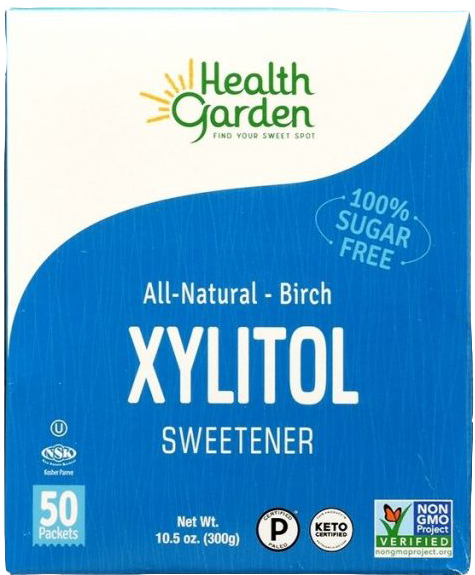
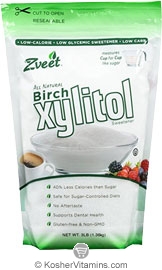
Xylitol is a natural sweetener that looks and tastes much like sugar. People use it in cooking and baking, in coffee and tea, and in sugar-free gum, mints and toothpaste. Here is what it is, how it is used, what to know about kosher and Passover, and the safety points everyone should know.
What xylitol is
Xylitol (pronounced ZY-lih-tol) is a sugar alcohol, a natural sweetener found in small amounts in many fruits and vegetables. Commercially it is made from xylose taken from plant fibers, usually birch and other hardwoods or corn cobs; it is sometimes called birch sugar. The human body also makes an estimated 5 to 15 grams a day during normal metabolism.
- It is about as sweet as sugar and looks like granulated sugar.
- It has fewer calories than sugar (about 2.4 calories per gram vs. 4 for sugar).
- It has a very low glycemic index (around 13, vs. about 65 to 69 for table sugar), which is why many people who watch their sugar use it.
How people use xylitol
- As a sugar replacement in coffee, tea, drinks, cereal, sauces and baking. Granulated xylitol and xylitol packets are sold for this.
- In sugar-free gum and mints, often after meals.
- In oral care, such as toothpaste and children’s tooth gel.
- In other products, such as some saline nasal sprays and sugar-free candies and cookies.
Cooking and baking with xylitol
Because xylitol is about as sweet as sugar, xylitol brands say it can be used like sugar in cooking and baking, usually measure for measure. A few practical points:
- Follow the directions on the package you buy, since brands give their own guidance.
- Results can differ from sugar in some recipes, for example in texture or browning, so try a recipe once before a holiday or simcha.
- Large amounts can upset the stomach (see safety below), so be careful with recipes that use a lot of it per serving.
- Label and store xylitol baked goods carefully and keep them away from dogs.
Xylitol and teeth
The main cavity-causing bacteria (Streptococcus mutans) cannot ferment xylitol the way they ferment sugar, so it does not feed them or produce the acids that harm enamel. The FDA allows qualifying sugar-free foods sweetened with sugar alcohols such as xylitol to say they "do not promote tooth decay." The American Dental Association says chewing sugarless gum for 20 minutes after meals can help prevent tooth decay, mainly by increasing saliva, and that gum is not a substitute for brushing and flossing. A 2015 Cochrane review found the evidence that xylitol products themselves prevent cavities is limited and of low quality. Studies that looked at cavity-causing bacteria generally used about 6 to 10 grams of xylitol a day, spread over at least three servings.
Makers of xylitol gum and mints give their own directions; for example, Zellie’s suggests 2 pieces of gum or 4 mints after eating or drinking, several times a day. Follow the label of the product you use.
Birch xylitol vs. corn xylitol
Xylitol is the same substance whatever it is made from, but the source can matter to some shoppers. Labels such as "birch xylitol" or "real birch" mean it was made from hardwood; other xylitol is made from corn cobs. People who avoid corn for allergies, or who avoid kitniyos on Pesach, may want to check the source and the Passover status (see below).
Kosher and Passover
Pure xylitol is made from plants, but it still needs reliable kosher certification, because of how and where it is processed. The certification for each product is listed on its product page; for example, on our site Health Garden and Zveet xylitol show OU certification, and Bakol and Mehadrin xylitol show Rabbi Akiva Asher Padwa. For Pesach, look for a Passover marking on the package and check each year, since agencies note that sweeteners can come from chametz or kitniyos sources. Gum, mints and other foods made with xylitol also contain other ingredients that need supervision; see our kosher gum and mints guide.
Safety notes
- Dogs: the FDA warns that xylitol can kill dogs. It can cause a sudden drop in blood sugar within 10 to 60 minutes, and liver failure. The FDA also notes reports in ferrets. If a dog eats anything with xylitol, call a veterinarian right away.
- Digestion: large amounts can cause gas or a laxative effect. Starting with a small amount and increasing slowly helps.
- Research on heart health: a 2024 Cleveland Clinic study (European Heart Journal) found that patients at higher heart risk with higher blood xylitol levels had more heart attacks and strokes over 3 years. In a small experiment, a drink containing 30 grams of xylitol increased platelet clotting. The study shows an association, not proof of cause, and its findings may not apply to the general population. If you have heart disease or clotting concerns, ask your doctor before using a lot of xylitol, for example in baking.
Shop
Frequently asked questions
Can you bake with xylitol?
Yes. Xylitol is about as sweet as sugar, and xylitol brands say it can be used like sugar in cooking and baking, usually measure for measure. Follow the package directions, expect some differences in texture or browning, and keep xylitol baked goods away from dogs.
Is birch xylitol different from corn xylitol?
It is the same substance. Birch xylitol is made from hardwood and other xylitol is made from corn cobs. The source may matter to people with corn allergies or who avoid kitniyos on Pesach.
Is xylitol kosher for Passover?
Only if the package has a Passover marking. Check the product and the year's Passover listings, since some xylitol is made from corn and sweeteners can come from chametz or kitniyos sources.
Is xylitol good for your teeth?
Cavity-causing bacteria cannot ferment xylitol, and the FDA allows qualifying sugar-free foods sweetened with sugar alcohols to say they do not promote tooth decay. Evidence that xylitol products themselves prevent cavities is limited.
Is xylitol safe for dogs?
No. The FDA warns that xylitol can be deadly to dogs. Keep xylitol and anything made with it away from pets, and call a vet right away if a dog eats any.
More guides
- Kosher certification symbols on vitamins and supplements
- How to tell if a vitamin or supplement is kosher
- Kosher capsules and gelatin: softgels, veggie caps and fish gelatin
- Kosher for Passover vitamins and supplements
- Kosher fish oil and omega-3
- Kosher probiotics: dairy vs. pareve
- Kosher vitamin D: D3, D2 and vegan options
- Is glucosamine kosher? Shellfish vs. vegetarian glucosamine
Sources
- FDA: xylitol is toxic to dogs
- FDA consumer update: xylitol and dogs
- FDA health claim: dietary sugar alcohols and dental caries (21 CFR 101.80)
- Cochrane review (2015): xylitol-containing products for preventing dental caries
- American Dental Association (MouthHealthy): chewing gum
- Nayak et al. 2014: the effect of xylitol on dental caries and oral flora
- Msomi et al. 2021: sugar alcohols review (J Food Drug Anal)
- Umai et al. 2022: xylitol production review (Frontiers in Sustainability)
- STAR-K: kitniyos chart (sweeteners)
- Cleveland Clinic: xylitol and cardiovascular risk study (2024)
- EUFIC: does xylitol increase the risk of stroke?
- Zellie's: how and when to use xylitol mints and gum
Got questions? We’re here to help.Mon–Thu 9 AM–5 PM · Fri 9 AM–12:30 PM (Eastern)

One of the largest selections of kosher-certified vitamins and supplements online. Family owned, serving customers since 1975.
| Mon – Thu | 9:00 AM – 5:00 PM |
| Friday | 9:00 AM – 12:30 PM |
| Sat, Sun | Closed |